


Your Website Looks Fine — Here’s Why It Still Isn’t Working
“Everything looks good.”
That’s the most common feedback businesses give about their website.
And yet, many of those same websites don’t generate leads, don’t support sales, and don’t help the business grow.
This is where the real problem lies.
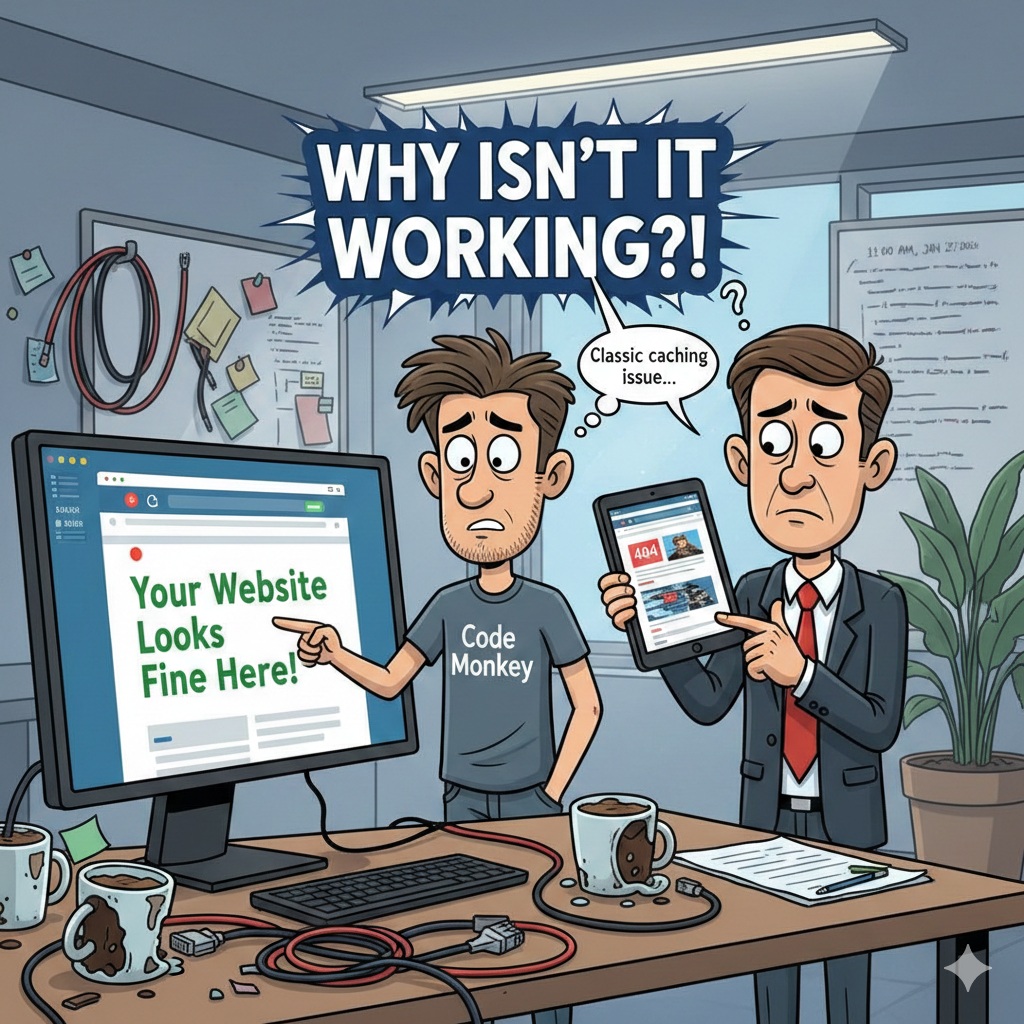
A website can look perfectly fine and still fail as a business tool.
The “Looks Good” Trap
Design is visible, but performance, structure, and usability are not. Most websites fail quietly because they are evaluated only on how they look, not on how they work. Visitors may arrive but don’t take action, mobile users drop off quickly, pages load slowly without appearing broken, content exists without guiding decisions, and SEO traffic remains low or irrelevant. Nothing feels “wrong enough” to trigger panic, but nothing works well enough to actually matter.

A Website Is Not a Poster — It’s a System
Many businesses treat their website like a digital brochure made up of an about page, a services page, and a contact page. While this structure may look complete, it rarely answers real user questions. A working website behaves more like a system. It guides users, removes friction, supports sales conversations, and provides clarity at every step. If a website doesn’t help users decide what to do next, it isn’t doing its job
A working website behaves more like a system:
- It guides users
- It removes friction
- It supports sales conversations
- It provides clarity at every step
- It guides users
If your website doesn’t help users decide what to do next, it’s not doing its job.
The Silent Reasons Websites Don’t Perform
1. No Clear Primary Action
When everything feels equally important, nothing stands out. Users shouldn’t have to guess what a company is offering, who it’s for, or what they should do next. When clarity is missing, users hesitate. In practice, clarity beats creativity every time.
2. Mobile Experience Is an Afterthought
More than half of website traffic comes from mobile devices, yet many sites are still designed desktop-first. Small issues add up quickly on mobile — buttons placed too close together, long unbroken blocks of text, heavy animations, and slow loading on mobile networks. A site that works “okay” on mobile almost always performs poorly.
3. Performance Is Ignored
A website doesn’t need to crash to lose users. Even a delay of one or two seconds reduces engagement, hurts SEO rankings, and lowers conversion rates. Performance problems are rarely visible, but they are always felt.
4. Content Talks At Users, Not To Them
Generic statements like “We deliver quality solutions” or “Customer satisfaction is our priority” don’t answer real questions. Strong website content anticipates doubt, explains value clearly, and builds trust without exaggeration. When content speaks at users instead of addressing their concerns, it fails to connect.
5. SEO Is Treated as an Add-On
SEO isn’t something that can be bolted on later. It is built into page structure, headings, load speed, internal linking, and content clarity. A visually strong website with weak SEO foundations will struggle to attract the right traffic, no matter how good it looks.
When a Revamp Is Enough — And When It’s Not
Not every website needs a complete rebuild. A revamp is often enough when the underlying structure is solid, the content can be improved, and performance can be optimised. A rebuild becomes necessary when the site was created without strategy, the content structure is unclear, scalability is limited, or even small updates feel painful or risky. The goal isn’t change for the sake of it, but improvement with intent.
What a Working Website Actually Does
A good business website loads fast, works smoothly on all devices, explains value clearly, guides users toward action, and supports marketing and sales efforts. It doesn’t shout, it doesn’t confuse, and it doesn’t demand attention. It quietly does its job every day.
Final Thought
If your website looks fine but feels invisible to your business, it’s worth asking one question:
Is it designed to impress — or designed to work?
Because the websites that perform best aren’t always the flashiest ones.
They’re the ones built with clarity, structure, and real users in mind.