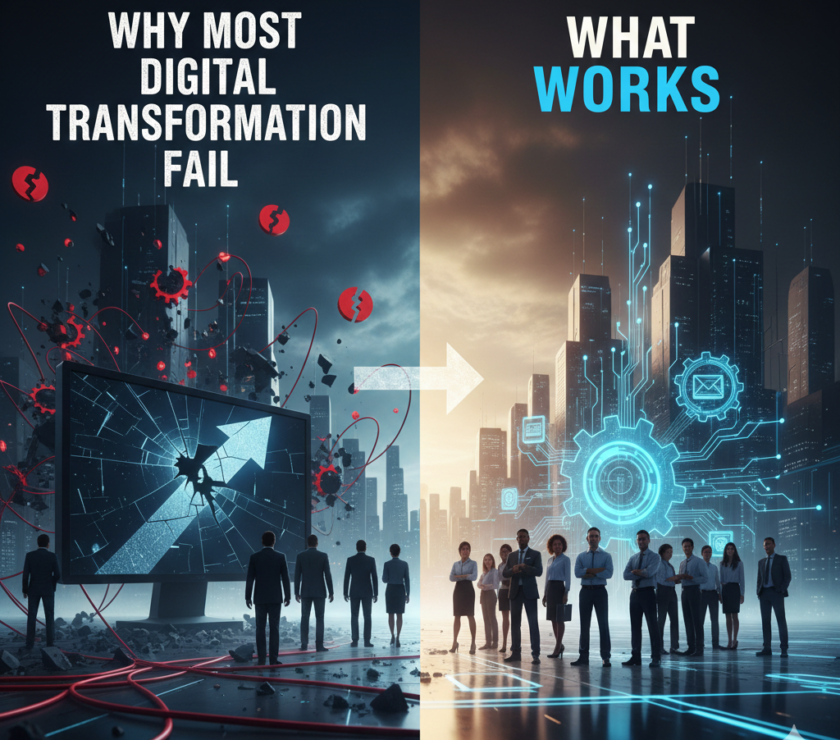


Why Most Digital Transformations Fail (And What Actually Works)
“Digital transformation” has become one of the most overused terms in business.
Every company wants it.
Few define it clearly.
Even fewer implement it successfully.
The problem isn’t technology.
It’s how businesses approach change.
The Digital Transformation Myth
Many organisations believe digital transformation means implementing new software, migrating to the cloud, buying an ERP or CRM, or adding dashboards and automation. These are tools — not transformation. Real transformation happens when how a business operates improves measurably.
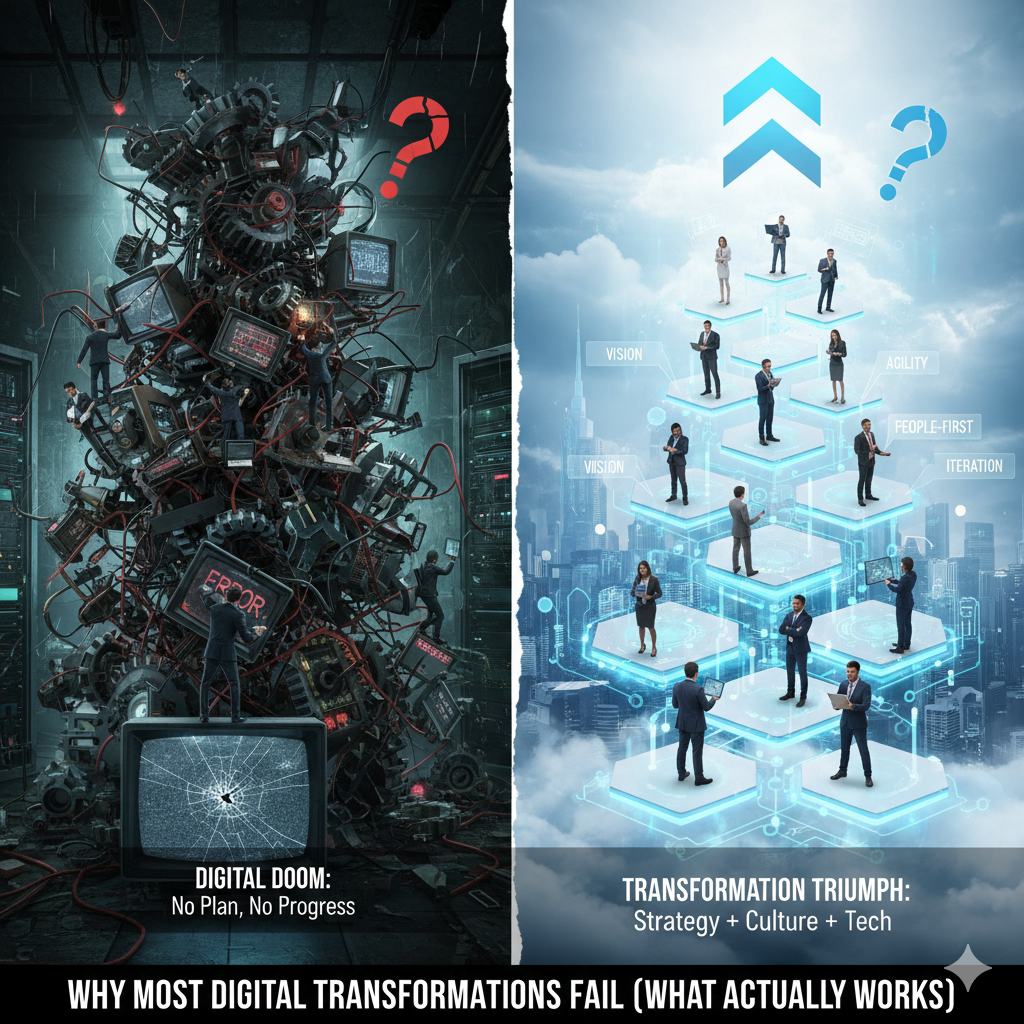
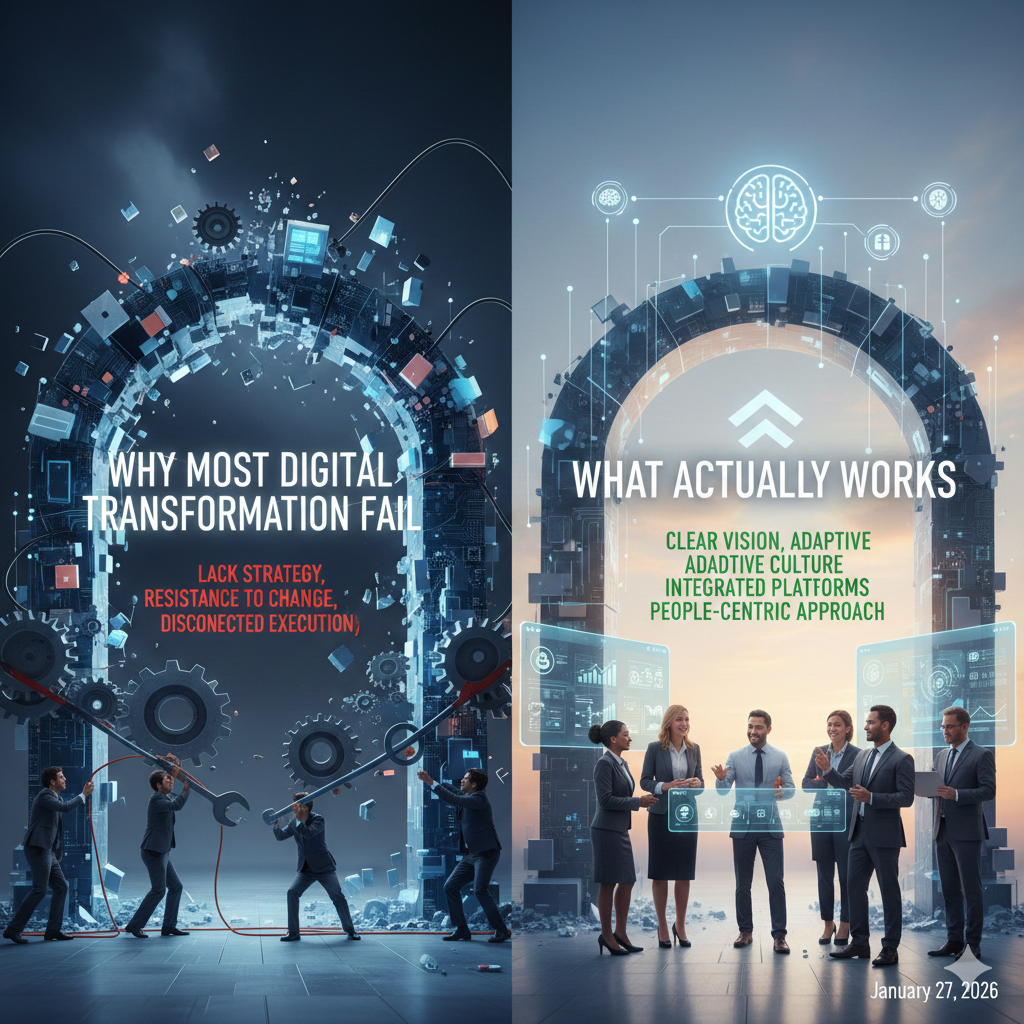
Where Digital Transformations Usually Go Wrong
1. Tool-First Thinking
Businesses often begin by asking, “Which tool should we use?” instead of “Which problem are we solving?” This approach leads to overlapping systems, poor adoption, and features nobody uses. Technology chosen without context rarely delivers value
2. Ignoring Existing Processes
No tool can fix a broken process. Automating confusion only creates faster confusion. Successful transformation starts by understanding current workflows, identifying bottlenecks, and simplifying processes before digitising them.
3. Lack of User Adoption
If teams don’t understand or trust a system, they won’t use it. Poor adoption usually happens because systems feel imposed, interfaces are unintuitive, training is skipped, or benefits aren’t clear. Transformation fails when people feel replaced instead of supported
4. Overengineering from Day One
Trying to build a “perfect system” upfront often backfires. Big-bang implementations take too long, cost more than expected, and are harder to adapt. Incremental change is far more sustainable.
What Actually Works Instead
1. Process Before Platform
Successful transformations begin by asking what slows teams down, where errors occur, and which tasks are repetitive. Only after answering these questions does technology come into play.
2. Small Wins First
The best transformations start small — focusing on one workflow, one department, or one measurable improvement. Early wins build confidence and adoption.
3. Systems That Fit Reality
Good systems adapt to how businesses operate — not the other way around.
Customisation, integrations, and thoughtful design matter more than feature lists.
4. Clear Ownership & Accountability
Transformation requires clear ownership, defined responsibilities, and ongoing refinement. Without these, even good systems decay over time.
The Role of Automation and AI
Automation and AI don’t create transformation on their own. When used correctly, they reduce manual effort, improve consistency, surface insights, and support decision-making. When used poorly, they add noise. The difference lies in intent and execution.
Digital Transformation Is a Journey, Not a Project
There is no finish line. The most successful businesses continuously refine processes, improve visibility, reduce friction, and adapt systems as they grow. Transformation isn’t about change for change’s sake — it’s about making the business easier to run.
Final Thought
Most digital transformations fail not because technology is lacking, but because clarity is. When businesses focus on real problems, practical solutions, and gradual improvement, transformation stops being risky — and starts being usefu